The Prequel to My Journey to Learning HTML, CSS, JavaScript / HTML, CSS, JavaScriptを学ぶまでの人生の前編
Learning to code for web development has been an on and off experience for me over the past few years. Before I get started on my portfolio, I’d like to begin with my journey from before learning to code, and go through some thoughts on topics such as coding and education.
私は数年前からウェブデベロップメントを学び始めたけど、この数年間の間は継続的に学びてきず、勉強し始まったら、また途中でやめたことは何回もありました。ポートフォリオを載せる前に、自分がコーティングを学び始める前の人生を紹介したく、教育やコーティングなどの課題についての思いも共有したいと思います。
I think coding had begun taking off as a hot skill to have back when I was still in college in the years around 2010. Smartphone usage was limited but starting to grow. The number of users at that time was far smaller than now in the year 2021.
私はまだ大学生の時の2010年頃、コーティングは重要なスキルだと指摘され、人気になりかけ始まる時期を迎えました。当時のスマホのユーザーの数は今2021年と比べたら、当然比べ物にならないぐらい少なかったです。しかし、ユーザーがまだそんなに多くなかったとはいえ、時代を変える前兆の技術だと見込み、ユーザーは増える方向でした。
Some (now popular) online learning platforms and services were just getting launched or noticed–some might not even have existed yet–and in the USA there was frequent talk about retraining the workforce and rethinking education to strengthen the emphasis on STEM (science, technology, engineering, and math) so that there would be more skilled workers to meet the demand that was at the time being filled by immigrants instead of Americans.
私はまだ大学生の時、今(2021年)では人気を得ているオンラインラーニングのプラットホームやサービスは当時設立されたばかりや注目され始められたばかりな時期でした。また、まだ存在していな企業などもあるだと思います。残った印象では10年前の時にアメリカでは労働者のためのスキルアップ研修や義務教育の改善案として数学、科学、エンジニアリング、技術の授業やイベントを強化と拡大するなどの話をよく聞きました。これらの対策や考えはアメリカ人の労働者はが現代に必要とされたスキルを身に付けられるように提案されました。なぜなら、必要とされている理系スキルを持っているアメリカ人が足りていなかったので、求人があるのに、求職者は仕事ができませんでした。そのために、企業らは外国人労働者をアメリカに招き、アメリカ人の求職者の代わりに技術系やIT系の仕事にやらせました。
The tech industry was still in need of more workers and Americans who lost employment due their old jobs becoming irrelevant didn’t have the skills required to fill them. To help correct the imbalance, retraining programs and aid was a subject that I recalled seeing often in the news. The economy and labor market was changing even before the recession, and continued to after its recovery.
IT業界ではエンジニアや従業員が必要とされる現状に対して、技術の発展で自動化などで失職したアメリカ人はIT業界で仕事できるスキルを持っていなかったです。この状況を緩和するために、スキルアップトレーニングプログラムや再就職のサポートについてのニュースは印象に残りました。経済と労働市場の変化は世界的不況の前から始まり、不況から復帰しても変化も続いています。
Looking Back at Myself / 自分を顧みる
A common saying is that hindsight is 20/20, but I think it’s more accurate to say that we get the opportunity to reflect on and learn from the past if we choose to look and think carefully about what went right and what went wrong. However, there’s no way to know for sure and see everything without letting any details, significant or insignificant slip through. What I want to talk about is not the simple single variable what-ifs such as, if I bought stocks in this company back at that time, I would be this much richer now.
It’s quite easy to draw a conclusion about a past event like an investment that is evaluated solely on the value of the commodity at Time A vs Time B. But there’s nothing to learn from such examples because no matter when you invest, the decision to invest is based on the expectation that it’s value will grow in the future. A recession that we all expect to recover from is just a brief window of opportunity in the big picture of investments.
I want to explore what one cannot know for sure. If I went to University B instead of University A, what kind of connections would I have made? Would I have gotten a different degree? Would I be living and working elsewhere now? If my parents exposed me to this other hobby instead of what I do now, would I have grown up learning entirely different things in an entirely different community? What if I had been friends in school with someone who ended up doing some great things instead of the friends I actually have in reality? And so on.
That being said, if I did start learning to code a decade ago and stuck with it, would I truly be better off and happier today? If I learned a set of skills but don’t see how it can be used, it ends up subjectively being useless, even if everyone else is saying otherwise in regards to finding a job.
For example, I could learn to write programs, but if I don’t have any inspiration to create a program that performs some task I want it to do, then I wouldn’t have what it takes to be an programmer, much less make a living being one.
So, even if I could code a website from scratch, what would be the point if there wasn’t a website I wanted to create for something I cared about as a hobby? Perhaps if I was properly exposed to the great work opportunities and the the wide variety of roles in the IT field, I would have connected the dots as a student, but that timeline does not exist in our universe.
Did I Drop the Ball?
I think that this is true for many when I write this, but when I was a student what I was exposed to in school greatly influenced what I thought of for career choices and the courses I took. Would you have gone the same route as you did if you knew and were exposed to something that really resonates with you while in school as opposed to discovering it after you are well into adulthood?
Life lessons learned the hard way may give us character and shape who we are through self discovery. However, I think for many who find themselves stuck in a place they don’t want to be and feeling hopeless because society thinks they are too old to change careers, that of course they would have done things differently. Regret is a powerful force to be reckoned with, but if properly harnessed, it can potentially work to our benefit. I won’t say that everyone will get to where they want to be, but I think it’s better than to go down fighting for what you want in life than in regret at not even taking the shot.
In American culture, there’s a fundamental cultural belief in personal responsibility. The weight it places on people can be fair at times but also unreasonable and to no one’s benefit at the same time as well.
To say that I should have learned to code earlier in life as opposed to in these past few years is a fair opinion, in hindsight. However, the reality facing students and learners were different back when I was still in school compared to the changes happening today even before coronavirus made its mark on the labor market and how people work.
In the present with trends such as the spread and development of mobile devices and home electronics connected to the internet, the shift from in-store shopping services to (or expansion into) online shopping, and the move from on-site servers to cloud services, etc. more and more jobs are becoming Tech-related, requiring people who can code programs not just for building webpages, but that can create and run applications, provide services, automate, and so on. Learning to work with the computer and the internet wasn’t just for geeks anymore, everyone needed to get on board or risk getting left behind.
Given how public education can vary in quality from poor to exceptional based on your geographic location, I believe it would be quite unfair to evaluate anyone’s educational outcome purely as a result of their diligence or laziness. Before considering school, I want to talk about family. I think social factors such as family play a huge role in shaping the educational and career outcomes of most people.
Disclaimer:
I’m not writing an academic paper to argue about a hypothesis and back it up with references to sources carrying the weight of research institutions and scientific reports on the outcome of experiments. I’m Just here to share my beliefs and experiences, and writing on the premise that some scientifically identified realities are common knowledge.
Family Structure
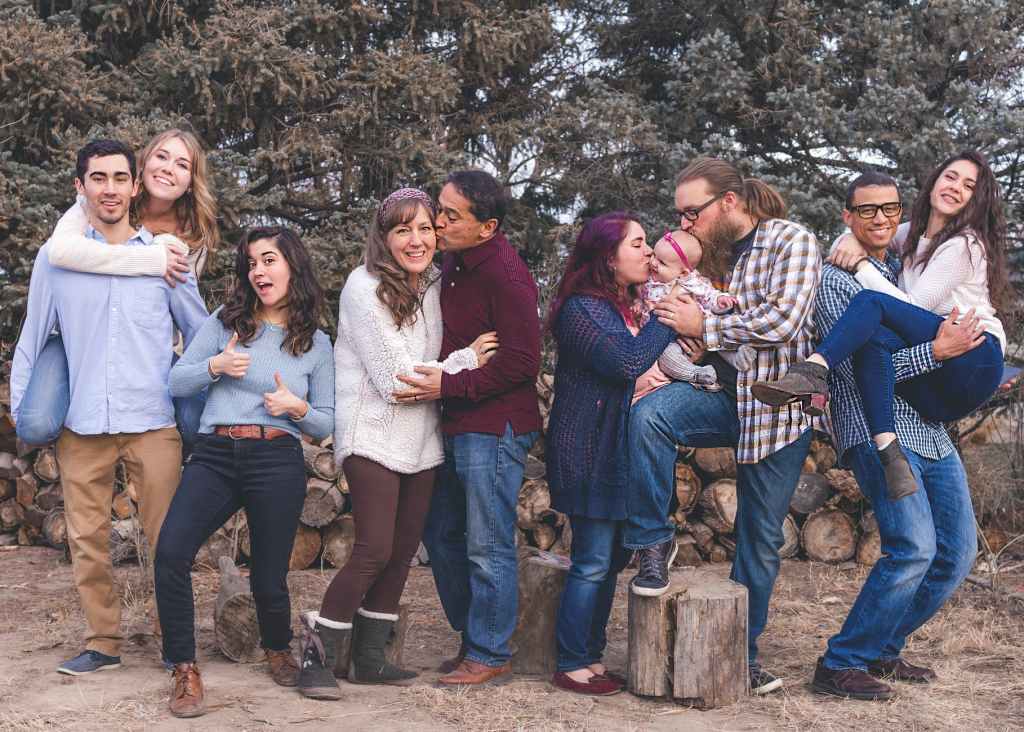
Starting with the family structure: Traditionally poorer families are often viewed as having a lower level of education than those who earn more, as education does have a direct relationship with income in many situations. Less money these days could mean the difference from just having a roof over your head, having food on the table, and being able to afford essential tools such as an internet connection and a up-to-date computer.
This could be changing with the trillions of dollars of college and grad school student loan debt held by college graduates in recent years. Many new American families could be said to be part of a new trend of “highly educated poor” where student debt burdens take decades to repay and inhibit their ability to invest, save, and pursue other life goals. That’s not to say their plight is as dire as those living below poverty income levels, but it is nonetheless a great obstacle to their pursuit of happiness.
As for me, even though my family was on the poorer end, I had the good fortune of growing up with computers around the house. I’ve always been comfortable using a computer but not to the extent that I learned how to assemble hardware and program software. Like many people, I was using the computer for games and later on for basic applications like Word for writing essays as part of high school assignments.
Looking back, I oddly don’t remember ever being taught how to use Word. I just opened up the application and typed away. Saving my work came naturally. The settings were mostly set to default since teachers’ wanted an easy to read font and font size. Then you needed to meet the minimum word/page count, often done in five paragraphs and for some by using double spaces. To make sure I minimized any mistakes and met the requirements, I would use spelling check and word count.
The only memories I had that stuck with me was in elementary school when for some reason we were being taught how to use hyperlinks to link one page to another during media/library class. Beyond that, most of my memories around computers growing up was just playing single player games. I was still in the times of dial up and even after DSL internet and satellite became an option, my family couldn’t afford the luxury.
Growing up in a single-parent household is pretty much all I know for family, but I expect I did not get as much parenting and guidance as one would in a more traditional two-parent household. It didn’t matter much in my household if my gaming habits didn’t have any concrete positive educational outcomes. As long as I got good grades and was staying out of trouble I was learning everything I needed to succeed, if we were to put all our faith in the public education system.
I could have been learning to use computers to create something rather than be just a consumer, but that’s not something kids think about when there’s something fun to do. At least most kids wouldn’t consider without some guidance from a family member or trusted adult.
Diversity, Change, Education

Exposure to diversity is also a big factor in determining what someone would want to do to make a living. For example, living in a small town where there were only a few career options and you already know people in most of those jobs, it’s not likely you’d consider doing anything outside of those options simply because without exposure, you wouldn’t even know other options exist and what to do to acquire the skills needed for to pursue that type of career. That type of discovery would only come with the decision to leave town in search of what the cities have to offer.
I believe the job market has also changed quite dramatically in recent decades, from the outsourcing of labor to countries where labor was cheaper and looser regulations meant savings for corporations, to the development of smarter technology that automate tasks, digitalize products and services, which have opened new creative possibilities and at the same time eliminated certain types of labor-intensive jobs.
I believe we have to factor in these variables of societal and technological change when looking at education.
What IS Education?

When we think education, we think school: a building, students, teachers, books, tests, grades, extra curriculars, etc. I think it’s safe to say, but not 100% accurate, that–for anyone in modern day America who wasn’t homeschooled (or perhaps online school only nowadays) for their entire childhood–we’ve all been there and experienced a shared cultural experience.
Wealth, race, ethnicity, even geography can greatly affect the perspective and experience each individual goes through from the events we attend and the people surrounding us, but nonetheless we would have more in common than not I would expect. It is not just the people we meet and classes we took, but how the day was organized and the perhaps universal expectations schools place on us as students.
What IS the purpose of education though? There are a lot of learning goals set by the government to guarantee a standard, such as literacy, critical thinking, civics, history, basic math and science comprehension, and some exposure to the arts and music in various forms and media, etc. We have to learn about certain subjects, not necessarily certain life and trade skills, to a certain level certified by grades and tests. That’s all good if we don’t have to think about how to and what we want to do to make a living by the time we or our are kids are adults.
In broad terms, I think education is a form of indoctrination. No, not in a diabolical sense, but in creating a shared national experience, to build a common identity so we are better able to see ourselves as a collective state and country; rather than smaller tribal units separated by our family, neighborhood, town or city. Idealists might view education in its truest form as bringing out the human potential of each and every individual. I think in reality there’s a mix of everything.
Does School Prepare You For Life?
If you ask everyone who is just graduating high school what they will do for a living, I believe a large majority will still be undecided or just have a vague idea. The approach to education, in my American experience, seems to have emphasized a lot of following your dreams and never giving up because you can achieve anything. At least that is the impression I still have with me today.
When we look at what everyone comes out of school with, I would say that in general school does prepare you for life. That is not to say school is the solution. The idea of school providing education has become so engrained into modern societies that there simply is no considerable alternative to it. To what extent school prepares someone for life depends on how you evaluate what preparedness is. And perhaps more importantly what the share of raising a child to adulthood should be the responsibility of the state versus the family.
School and Family
The family has always been the primary caregiver and carried the responsibility of bringing up their children and preparing them for the challenges of adulthood I think in most societies since humans were around. The family had been much more extensive and involved with grandparents, aunts and uncles, cousins, in-laws, etc. But things have changed over time and people don’t live in as close proximity of each other and the family unit has grown smaller. Conversely the larger society that we all belong to had gotten bigger, growing from tribes made up of a collection of several families all the way up to nation states filled with densely populated cities stretching across vast swaths of land if not a large portion of a continent.
The concept of two parents raising children together on their own as a nuclear family is a common sight in many places, but that has changed too with realities such as divorce, single-parent households with no child support, and couples choosing not to get married but living and raising children together.
Stay-at-home parents will probably agree that raising children and taking care of the place they call home full-time is already a tough task. Perhaps a majority of two-parent households already have both parents working while their children are at school or being looked after at daycare. The family’s role in educating their children had shifted more and more to strangers with credentials, and as long as the parents can keep working to sustain their livelihoods and the children are learning something, who’s going to complain about this societal arrangement?
When everything was tied to the family, the social relationships of the children and parents were very much intertwined. When children become separated from their parents in creating their ever expanding social spheres starting from their first days of school, it creates a disconnect in the family. When you have your own social circles, there’s not much of a need to rely on your family to make connections, in fact it doesn’t look very cool when your relying on your parents as a kid. No, you have to show you are a kid who can stand up for yourself.
In many respects, school is a place that serves the function of getting children to learn to become independent from their parents. This is achieved primarily, in my opinion, by socialization and acclimating everyone to a climate where for most of the people they interact with are outside of their family. The socialization teaches everyone the rules of society filled with the people you like and hate. Sometimes this is just for part of the day, and other times it could be for extended periods if going to say a boarding school.
However, I don’t think it’s a place that prepares you fully to become an independent individual outside of what they’re required to teach. In terms of helping students to realize their full potential, that only applies when there are devoted teachers who go above and beyond in classrooms where the student to teacher ratio is more reasonable. Furthermore, the human connection between the student and teacher can greatly influence the learning and developmental outcomes of school.
That sort of messaging just doesn’t line up with the responsibilities and expectations placed on you when you have to start working to make a living. So you then go to college and spend more time studying, only this time there’s much less structure to your learning; and your ability to succeed can indeed depend on how well you’re able to train yourself to manage time and money wisely. Making good choices is something most adults still fail to do regularly.
To be continued…
 One Chance Works